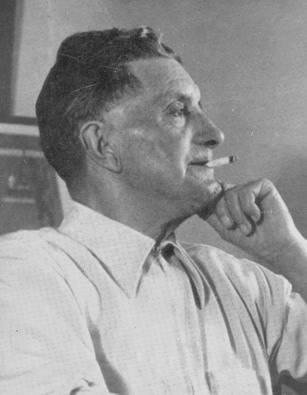
bc Arthur W. Upfield, Creator of Detective Inspector Napoleon Bonaparte (Bony) of the Queensland Police.
Arthur W. Upfield
© Kees de Hoog 2004-2009 kdehoog@gmail.com
Just ONE page on the
Collecting Books and Magazines web site based in Australia.
Page updated 29th November, 2009.
Short Biography
Published Novels
Other Published Works
Further Research
Links to Other Web Sites

News

27 November 2009: Up and Down Australia Again: More Short Stories by Upfield and edited by Kees de Hoog, is published by Lulu.com. Available from www.lulu.com/kdehoog .

16 June 2009: 3 Acts of Murder, a telemovie about the Murchision murders, premiered on ABC1 in Australia. Set in the late 1920s and early 1930s, this true crime story stars Robert Menzies as Arthur Upfield who devises the perfect murder for his Bony novel, The Sands of Windee, unaware that it will be used in real life. A DVD of the movie will be released on 3 September 2009. To pre-order it, or for more information, go to www.3actsofmurder.com.au .

12 February 2009: The Murchison Murders, Upfield's account of what happened when Snowy Rowles used the perfect murder method when killing three men, republished in Up and Down the Real Australia, another collection of Upfield's shortworks edited by Kees de Hoog. Available from www.lulu.com/kdehoog .

July 2008: Arthur W Upfield: Life and Time of Bony's Man, a new Upfield biography by Andrew Milnor, released and available from all major online bookstores.

27 February 2008: Up and Down Australia: Short Stories by Upfield and edited by Kees de Hoog, is published by Lulu.com. Available from www.lulu.com/kdehoog.

Short Biography

Arthur William Upfield is well known to aficionados of crime detection fiction as the creator of Detective Inspector Napoleon Bonaparte (Bony) of the Queensland Police who appears in 29 novels, most set in outback Australia. It's not so well known that he also wrote another six published novels, as well as a biography and numerous articles published in Australia and overseas.

Upfield was born into a family of drapers on 1 September 1890 in Gosport on Portsmouth Bay, Hampshire, England. An avid reader of boys' adventure magazines that were popular at the time, he did not do well at school. Apprenticed aged 16 to a real estate agent and surveyor, he was more interested in writing novels and other, more daring, escapades. He once claimed his father sent him to Australia in despair, saying: “It is so far away that you will never save enough money to return", but it is more likely he wanted to go.

Arriving in Adelaide in 1911, Upfield soon went to the outback where he worked as offsider to a mule team driver, fence builder and boundary rider, opal digger and drover, to mention just a few. He quickly developed an attachment to the outback that laid the foundations for the rest of his life.

On the outbreak of World War I in 1914 he joined the Australian Imperial Forces and served in Egypt, Gallipoli, England and France. In 1915 he married Ann Douglass, an Australian Army nurse, in Cairo, and a son was born in England in 1920. They returned to Australia in 1921 and Upfield "went bush" again soon afterwards.

He had continued to write desultorily, and in 1924 was persuaded to "have a go" at becoming a professional writer. After four novels and several articles were published, he left the bush in 1931 to live in Perth with his family and write full time.

With the help of workmates while working on the No 1 Rabbit Proof Fence in Western Australia, Upfield developed a method of disposing of a body for his second Bony novel, The Sands of Windee. One "mate", Snowy Rowles, adopted that method when committing at least two murders in 1929, and Upfield gave evidence at Rowles' trial in Perth in 1932. See Murder on the Rabbit Proof Fence for more details.

Upfield joined The Herald newspaper in Melbourne in 1933, but was retrenched and returned to freelance writing the following year. Over the next five years his output of articles and short stories was prolific as he struggled to make a living. The only novels he wrote during that time and later were Bony stories - many were serialised in journals as well as published as books.

When World War II began in 1939 he joined Military Intelligence as a censor. He resumed writing in 1944, producing about one novel a year.

Some Bony novels, previously published only in the UK and Australia, were sent to a US publisher in 1943. They proved very popular and most of the Bony novels were published there within a short time, as were those he wrote later. The extra sales allowed Upfield to live comfortably from writing Bony novels for the rest of his life.

In 1946 he left Anne to live with Jessica Hawke, a widow, in a defacto relationship that lasted until his death in 1964. Together they moved from Melbourne to Aireys Inlet on the south coast of Victoria in 1951, then to Bermagui on the south coast of New South Wales in 1954 where Upfield indulged his favourite pastime of swordfishing, and finally to Bowral just south of Sydney in 1957.

Upfield spent several months each year wandering around the outback until poor health prevented it. In 1948, he led a National Geographic Society expedition to Wolf Creek Crater in the Kimberley region of Western Australia, which he later used as the setting for The Will of the Tribe.

A feature of all Upfield's writings is first hand knowledge of the locations, both real and imaginary, together with highly evocative descriptions of the landscapes. For example, Death of a Swagman takes place around the Darling River in New South Wales where he spent the most time in the bush; The New Shoe was set in Airey's Point; and Bermagui was the location for The Mystery of Swordfish Reef.

Upfield is now recognised as the first Australian writer of mystery stories. But his books were never critically acclaimed here during his lifetime, despite their popularity in the UK and the US where the mystery novel had become an established form of literature. His response was to write An Author Bites the Dust, published in 1948, an attack on the Australian literary establishment.

The Cake in the Hatbox was a runner-up for the 1956 Gold Dagger award from The Crime Writers Association of Great Britain. The Bushman Who Came Back was awarded the 1957 Book of the Year by Ellery Queen Mystery Magazine, and was nominated for the 1958 Edgar Award from the Mystery Writers Guild of America. Upfield was the first non-American admitted to the Guild.

Over the years his books have been translated into many languages, read over radio, and transformed into radio plays and television series. A Bony comic strip was created in 1961 but it did not gain syndication.

Follow My Dust by Jessica Hawke is Upfield's official biography, but there is a strong suspicion that he partly wrote it. Some aspects of his life, such as his marriage and army experiences, are barely mentioned; and there are significant discrepancies with an earlier unpublished autobiography.

It's generally agreed that his best novel is Death of a Lake in which the solution to the mystery is revealed when a lake dries up. Upfield himself considered Gripped by Drought to be one of his best and I agree. Used copies of all Bony novels are still readily available, but The House of Cain, A Royal Abduction and Gripped by Drought are quite rare. The Beach of Atonement has recently been republished at http://stores.lulu.com/thewombat.

I have always enjoyed mystery stories starting with Sherlock Holmes and Agatha Christie's stories. I had read most of the Bony books when, looking for an interest outside of work, I decided in 2001 to delve further into the works of an author. It made sense to choose an Australian author, and from that point Upfield virtually chose himself.

Published Novels With alternative titles and in order of publication (in book form unless otherwise indicated). * Denotes non-Bony novels.

*The House of Cain, 1928.
The Barrakee Mystery, 1929; The Lure of the Bush, 1965.
*The Beach of Atonement, 1930.
The Sands of Windee, 1931.
*A Royal Abduction, 1932.
*Gripped by Drought, 1932.
*Breakaway House, serial 1932, book 1987.
Mr Jelly’s Business, serial 1932-3, book 1937; Murder Down Under, 1943.
*The Great Melbourne Cup Mystery, serial 1933, book 1996.
Wings Above the Diamentina, 1936; Winged Mystery, 1937; Wings Above the Claypan, 1943.
Winds of Evil, 1937.
The Bone is Pointed, 1938.
The Mystery of Swordfish Reef, 1939.
Bushranger of the Skies, 1940; No Footprints in the Bush, 1944.
Death of a Swagman, 1945.
The Devil’s Steps, 1946.
An Author Bites the Dust, 1948.
The Mountains Have a Secret, 1948.
The Widows of Broome, 1949.
The Bachelors of Broken Hill, 1950.
The New Shoe, 1951; The Clue of the New Shoe, 1952.
Venom House, 1952.
Murder Must Wait, 1953.
Death of a Lake, 1954.
Sinister Stones, 1954; The Cake in the Hatbox, 1955.
The Battling Prophet, serial 1955, book 1956.
The Man of Two Tribes, 1956; Man of Two Tribes, 1956.
The Bushman Who Came Back,1957; Bony Buys a Woman, 1957.
Journey to the Hangman, 1959: Bony and the Mouse, 1959.
Bony and the Black Virgin, 1959; The Torn Branch, 1965.
Valley of Smugglers, 1960; Bony and the Kelly Gang, 1960.
The White Savage, 1961; Bony and the White Savage, 1961.
The Will of the Tribe, 1962.
The Body at Madman's Bend, 1963; Madman's Bend, 1963.
The Lake Frome Monster, 1966 (completed by J L Price & D Strange).

Other Published Works

The Gifts of Frank Cobbold is a biography written in 1935 and first published in 2008. Copies appear to be limited at this stage.

I have found about 250 short stories and articles by Upfield published in magazines and journals including The Wide World Magazine, The West Australian newspaper, The Herald (Melbourne) newspaper, Walkabout, and The Australian Journal.

33 fiction stories, including the only known Bony short story, as well as the unfinished first chapter for another Bony novel, were published in an anthology called Up and Down Australia in 2008. There are humorous yarns, crime stories, comedies, and dire tales about the dangers of living and working in the bush.

45 autobiographical articles, ranging from humorous outback anecdotes to personal experiences at Gallipoli and the Somme during the First World War were published in an anthology called Up and Down the Real Australia in 2009. It includes The Murchison Murders, Upfield's account of how the 'perfect murder' was developed for his second Bony novel, The Sands of Windee; how Snowy Rowles used it to commit at least one, probably three, murders in 1929; how the crime was detected and solved; and what happened at Rowles' trial in 1932.

4 more short stories, as well as a radio play and the first five chapters for the unfinished Bony novel were published in an anthology called Up and Down Australia Again in 2009. As well as more tales from the Australian outback, there are stories based on Upfield's experiences at Gallipoli during the Great War, and historical fiction based on "what really did happen" during the early years of European settlement and expansion in Australia.

All three books are available online from www.lulu.com/kdehoog .

Some other articles:
Fighting the Dingo, The Wide World Magazine, vol 56, Apr 1926, pp441-446.
Fur-Getting in Australia, The Wide World Magazine, vol 59, no 349, Apr 1927, pp64-70.
The Land of Opportunity, Part 1, The Wide World Magazine, vol 61, no 365, Aug 1928, pp363-374.
The Land of Opportunity, Part 2, The Wide World Magazine, vol 61, no 366, Sep 1928, pp492-498.
A Visit to Lake Frome, Walkabout, vol 1, no 2, Dec 1934, pp44-47.
Men, Sheep and Far Horizons, Walkabout, vol 1, no 3, Jan 1935, pp8-16; Bolton A T (Ed), Walkabout's Australia, Ure Smith, Sydney, 1964, pp11-19.
Hosts Hidden in the Bush, Walkabout, vol 1, no 4, Feb 1935, pp22-25.
Patrolling the World's Longest Fence, Walkabout, vol 1, no 5, Mar 1935, pp 11-16.
An Australian Cattle Station, Walkabout, vol 1, no 8, Jun 1935, pp27-29.
Trapping for Fur, Walkabout, vol 1, no 11, Sep 1935, pp25-30.
Angling for Sword-fish, Walkabout, vol 8, no 4, Feb 1942, pp34-38.
This Jealous Land, Walkabout, vol 14, no 6, Apr 1948, pp38-42.
Walking the Cattle, Walkabout, vol 14, no 7, May 1948, pp8-13.
Pearling Town of the North-west, Walkabout, vol 15, no 3, Mar 1949, pp29-32.
The Vermin Fences of Western Australia, Walkabout, vol 15, no 5, May 1949, pp17-20.
The Critics Value, The Austrovert, vol 4, 1951, p8.

Further Research
Hetherington J, Forty-Two Faces, Cheshire, Melbourne, 1942, pp19-25 (a short biography).
Hawke J, Follow my Dust, Heineman, Melbourne, 1957 (Upfield’s official biography).
Asdell P T (Ed), The Bony Bulletin, Maryland, vol 1, Nov 1981 - vol 33, Jul 1990 (an occasional journal for Bony & Upfield enthusiasts); The Collected Bony Bulletins, Tucson, Corgi, 2007 (http://www.corgipublishing.homestead.com/).
Ruskin P, “Arthur Upfield: They Still Follow His Dust”, This Australia, vol 5, no 3, Winter 1986, pp 53-58 (a short biography).
Browne R B, Spirit of Australia, Bowling Green, 1988 (a critical analysis of Upfield’s crime fiction).
Walker T, Murder on the Rabbit Proof Fence, Hesperian, 1993 (a detailed look at the Snowy Rowles murders case).
Finder J H (Ed), Marsupial Mutterings, New York, no 1, Nov 1994 - no 6, Nov 2007 (an occasional journal for Bony and Upfield enthusiasts).
Burnet R, An Upfield Bibliography, Australian Book Collector, 2002 (a comprehensive listing of the various editions of Upfield’s books and their values).
Lindsey T, Arthur William Upfield: A Biography, Internet, 2005 (http://wwwlib.murdoch.edu.au/adt/browse/view/adt-MU20051003.113934).
In Search of Bony, Marcom Projects, DVD 6SB1SB, 2007 (http://www.marcom.com.au/product_details.php?prod=6SBISB).
Milnor A J, Arthur W. Upfield: Life and Time of Bony's Man, Newcastle: Cambridge Scholars, 2008 (a biography).

Other Web Sites
The Unofficial Arthur W Upfield and Inspector Napoleon Bonaparte Homepage (http://homepage.mac.com/klock/upfield/upfield.html).
Bony - Arthur W Upfield’s Australian Detective (www.quaggabooks.co.uk/upfield/).
Famous Folk Forum: Arthur W Upfield (http://heenan73.proboards29.com/).
Classic Australian Television: Boney (http://www.classicaustraliantv.com/Boney.htm).
Radio National Books and Writing: The Arthur Upfield Mystery - Bony (http://www.abc.net.au/rn/arts/bwriting/stories/s550978.htm).
Australian Natural History: Human ecology context for the "Bony" mysteries by Arthur William Upfield (http://nicholnl.wcp.muohio.edu/DingosBreakfastClub/Australia/UpfieldMysteries.html).

CB&M Editorial note: Winds of Evil was serialised in the Australian magazine Everybody's, beginning 24th January, 1962.

Sign our GuestbookView our Guestbook

Back to Collecting Books & Magazines INDEX

Click to subscribe to Collecting Books and Magazines Newsletter.

bc