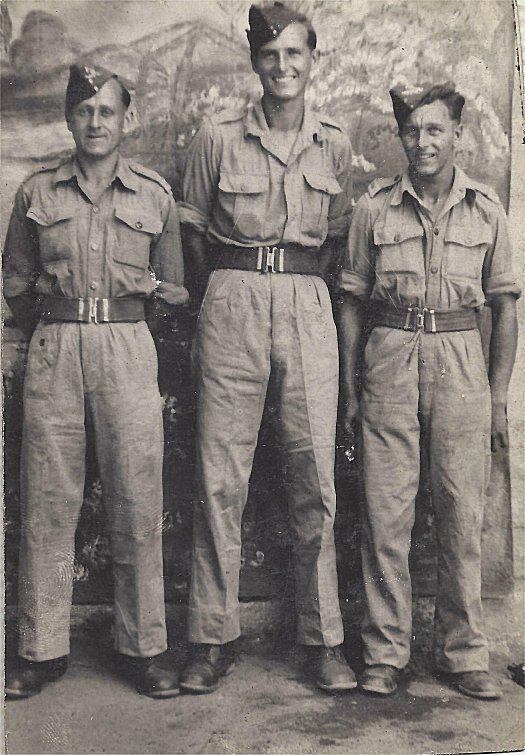
| bc | Bill Lofts, of the Lofts and
Adley literary investigation team.
Any photos or illustrations of Bill would be appreciated. A loss to the world of popular children's and crime fiction occurred in June of 1997. William Oliver Guillemont Lofts, 'Bill' Lofts as he was known throughout the literary world, passed away on June 27. Bill, in partnership with his long-time friend the late Derek Adley, authored among many other publications bibliographies on Edgar Wallace (The British Bibliography of Edgar Wallace, Howard Baker, Lon 1969) and Leslie Charteris (The Saint and Leslie Charteris, Hutchinson, Lon 1971)His juvenile bibliographies included The Rupert Index, William, DC Thomson and John Leng Annuals, The Hotspur, Gem, Magnet, The Detective Weekly, Boys Friend Library and The Thriller. The two books I use more than any others are The Men Behind Boys' Fiction and Old Boys' Books - A Complete Catalogue. A decade ago when I'd published my first foray into children's book collecting, namely Golden Years, a Sydney collector suggested that I send Bill a copy. That done, I was surprised to receive a friendly and encouraging reply from Bill within little more than a week. At the time he was working as a freelance researcher for a London publisher, having left his engineering post at Zenith Carburettors in the late 1960s. From that day until the mid-1990s, we exchanged regular letters. Early on, my letters consisted mostly of questions which Bill was only too happy to answer, no matter how much work was required on his part. Later on he began sending me any news clippings he thought would interest my readers and continued to do so regularly. Bill Lofts was born at St Marylbone, London, in 1923. He joined Zenith (then Solex) Carburettors immediately upon leaving school but the war arrived and saw him posted to Burma. Trevor Adley in his special tribute to Bill back in the hundredth issue of Book and Magazine Collector (July 1992) stated that Bill, while imprisoned in A Japanese POW camp, located a tattered copy of the Sexton Blake Library "in a dimly lit corner". Thus was his enthusiasm for juvenile literature re-born. Following his return home Bill began collecting the SBL, together with The Magnet, Gem and other boys' weekly story papers. He became curious about the writers behind the stories, having heard that some were famous authors making extra money behind pseudonyms. Bill began submitting articles to The Collectors' Digest and it was through one article in particular on SBL author John Hunter, that brought him and Derek Adley together. Eventually the two became a unique team dedicated like Holmes and Watson (or Sexton Blake and Tinker?) to solving every mystery which came their way. Bill would do the investigating while Derek would collate the information received, eventually turning it into a readable format. Bill not only solved literary mysteries of the above type: he found people, often writers who had long since disappeared from the public. I hope to give you examples in future issues but can attest to his talents. So far as I knew my father was an only child. Eighteen months ago Bill sent me a copy of a birth certificate attesting to a younger sister. That's another story and a mystery now left for me to solve. Recollections from relatives and friends Dr Brian R. A. Wybrow (Bill was Brian's Half-Uncle)
2020 As I look back on my contact with him, I wish I had had more time to talk to him, because he was very interesting to talk to. If anything more occurs to me, I will let you know. Nicholas Bennett, Reading UK Violet Davies -
I asked Violet, Bill's
sister, what she could recall of Bill, so far as his childhood and hobby
interests were concerned. Dan Bodenheimer
The Eccentrics Over the last thirty years, I must have met hundreds if not thousands of collectors of juvenile literature. Nearly all have not only been highly intelligent, and friendly, but perfectly normal people in every way. I mention this because it is unfortunate that some people who are not collectors regard the collecting of 'comics' as they call them, as being a bit strange for an adult, or to put it more broadly they must be eccentric. The word according to the dictionary means 'to do things in a manner that is not accepted as normal behaviour', but then what is normal behaviour? Something that is probably normal to one person, is not normal to another. It is only in extreme cases that a person can really be classed as eccentric, the classic example being the American billionaire, who lived by scrounging scraps of food out of dustbins, and slept in old newspapers to avoid buying bedclothes. A more recent case was with the coming of colour TV a man was seen in Piccadilly wearing a tin helmet, Scots kilt, with a pair of flippers on his feet. In his right hand he held aloft a stick of rhubarb. When asked what he was doing he replied: "I'm trying to get the BBC in colour."! Many collectors whom I met told me that I was the only other enthusiast they had seen, including most of those mentioned in the following essays. These seven I did find slightly odd - though the reader may think otherwise! As I met them now over 25 years ago, and they were at least 30 years older than me, one must presume that all have now passed on. To avoid any embarrassment to relatives I have changed their names and localities. With the exception of Colonel Whithington-Spooner, I really liked them very much. At the same time I would like to assure the reader that everything written is perfectly true, and exactly how it happened. The Man Who Pinched My Chips Tom Smith was a Cockney. A small wizened man of about 80. He was dressed in the traditional cloth cap and muffler, and lived over in South London. Tom was what I called the last of the old brigade: that is to say collectors who remembered and read such papers in their youth as 'Boys Standard' and 'Boys of Great Britain' which flourished in the 1870s. This group was fast dying out when I started my interest in juvenile literature in 1950. At that time I had written quite a few articles dealing with the Victorian papers, and Tom had obviously read most of them and had written to me with some queries. In one of his letters he mentioned that he was an Old Aged Pensioner, and with his savings now gone, he could not afford to buy his favourite papers any more. Should I at any time have some odd copies spare, it did not matter how tattered or incomplete they were, he would be pleased to have them. As it happened I did have a pile of the old papers, bought very cheaply because of their bad condition and which I decided he could have with my compliments. With Tom living only at Elephant and Castle, a place direct on the Bakerloo line where I live, I suggested that I deliver them in person, and at the same time have a cup of tea somewhere, and a chat. He readily agreed, and at 6.00pm one evening, he was awaiting me in the manner described. He held out a rather grubby hand and said "Pleased to meet you, Guv" - 'Guv' being my title from then on. He knew a nice cafe not far from where he lived, and so down the Old Kent Road we went, up a side street and within a few minutes we were sitting in one of the traditional working men's type of eating houses, then a bit deserted because of the early evening. As I had come straight from work and was feeling a bit peckish, I ordered a pie and chips, and asked Tom "if he would like the same." "Thanks Guv", he said. "Don't get much chance to have extra nosh these days". Shortly afterwards with two big cups of hot, steaming tea, we were tucking into a big plate of hot pie and chips. Now I should explain here that I am a very slow eater, and take my time over food. While Tom was doing justice to his meal and eating it as fast as Billy Bunter - I had not eaten a third of my meal while he had finished. Being trained in detective work, I also have a trait of seemingly looking at some object, while still noticing anything happening from the corners of my eyes. With my eyes fixed on a playbill posted on the wall in front of me, I suddenly saw Tom's hand quickly go to the side of my plate and pinch a chip! My first reaction was one of amusement, thinking he was a sort of practical joker, but keeping a poker face I pretended that I had not noticed. A rather grimy hand took another chip, and another. I decided that the poor chap was short of food with his small pension and said nothing. But now put off from finishing the rest of my meal, I pushed the plate back and said I was full. Tom looked at the plate and asked if he could finish it off, so of course I said I did not mind at all! After this amusing experience, Tom suggested I might like to see his place and 'collection' which was just round the corner, and soon we were outside a small terraced house that looked as if it was due for demolition anytime. Tom opened the door and a smell of musty old paper came reeking out. In the passageway and both sides were piles and piles of bundles of old newspapers, and books, all in a state of decay and damp. Tom lit an old gas-lamp and threw the lighted match behind him, almost causing me heart-failure. In his front room with newspaper on the floor was just an old wooden table while and round the room were piles and piles of more musty old books. Also in the room was a fire place with a small fire burning. Tom threw on it some large pieces of wood, and soon sparks were flying out into the room. I was frightened that anytime the place would be alight - though he did not seem to notice. Upstairs were two rooms that used to belong to his brother, who had died some years previously, and these likewise were full up to the ceiling with old newspapers, and huge volumes of books only fit for waste-paper. After he lit a cigarette rolled from an old tobacco tin and threw the lighted match behind him, I decided it was time to say goodbye to Tom, and next I heard he had died. It took the local council's two large lorries to remove his collection as waste-paper, but often I wondered if among that pile he did have some valuable old papers, and I would have liked to have gone through them. The money he could have got from the sale of these may have saved him the trouble of having to pinch my chips! # The Origin of Sexton Blake It's surprising the number of characters - household names in the comic and fiction world - who have been subject to some controversy as to their origin. For example: Tarzan, that great jungle hero created by Edgar Rice Burroughs; according to some he was nothing new, just an adult version of the character in Rudyard Kipling's Jungle Books; this time instead of a boy, a man swinging through the trees. The Saint - Simon Templar - Leslie Charteris' famous hero, they say, was really influenced by earlier adventurers such as Raffles - the gentleman crook created by E W Horndung - who also helped people in distress. Personally I always think this comparison slightly unfair as both these characters had their own individuality. Really, you could trace some characters right back to the bible! Murder stories, for instance, could have been influenced by Cain's killing of his brother Abel. Captain Marvel and Superman, the famous comic book heroes, were subject to such controversy as to their origins that it resulted in a big court case in America around the period of the Second World War. In the case and argument of who actually created Sexton Blake, the world famous detective of Baker Street, some argue that he was obviously based on the immortal Sherlock Holmes. Blake was termed by (I think) the famous crime writer Dorothy Sayers, as "The office boy's Sherlock Holmes", meaning of course he was a detective to be read by the young, and the not-so-well educated sections of the public. Unfortunately it must be said that today in 1989, Sexton Blake the famous detective is fast dying out as a household word, with the new generations hardly aware of him and his claim to fame. The last original story appeared way back in 1970. There have been no new tv or radio series, and it has also been proven that one or two picture strips of him, intended for boys' papers, were changed by the editors to more modern sleuths - such as Victor Drago in Tornado Picture paper. In the early sixties, on the south coast of England, I was able to meet the son of the man who wrote the very first Sexton Blake tale, which appeared in the Halfpenny Marvel in 1893. His name was Harry Blyth. His father had the same name though he used the name Hal Meredith on the story entitled "The Missing Millionaire" (No. 6 dated December 1893). The son told me that he remembered his father showing him a manuscript of a story and asking if he liked the name of Frank or Sexton Blake as the hero. He thought that Sexton sounded better, so the name was used in the historic tale. This, however, was disputed by one of the many old editors I met at the famous Fleetway House. On the staff of the early papers - including Marvel, Union Jack and Pluck - he told me he had once asked how Sexton Blake originated and was told that the original name had been Frank Blake but the editor-in-charge had thought it not lurid enough, substituting 'Sexton'. In England a sexton is a keeper of a graveyard, so the word has eerie connotations with a ring about it of gravestones and death. Curiously, Sexton is not a proper Christian name and I have never heard of anyone of that name. The same could be said of the name 'Sherlock' thought there may now be people named after these two great detectives. Now it must be said that editors certainly used to give ideas and suggestions for authors to use - as well as plots for stories; it was one of their jobs. No author (especially a boys' paper writer) could write exactly what he wanted - not even the great Frank Richards of "Greyfriars" and "Billy Bunter" fame! In fact only a few years ago it was revealed, when D C Thompson - an editor of Dandy - died, that he was really the creator of Desperate Dan and many others. Even E S Brooks of "St Franks" fame admitted in later years that it was Montague Haydon, Managing Editor at Amalgamated Press, who gave the name of 'Norman Conquest' to his detective stories. So what is the truth of Sexton Blake? Well, unfortunately it seems to be a stalemate, with just the word of one against the other. Harry Blyth died of typhoid fever in 1898, aged only 46 years. He did not live long enough to see how world famous the detective would become, with 4,000 stories about him plus many in strip form and even a gramophone record, and not forgetting numerous plays and films. There is no doubt it was the name of 'Sexton' that caught the imagination of the public, for Harry Blyth created many other detective with such names as Stanley Dare, Frank Ferrett, Martin Steele and Gideon Barr. All have long since passed into oblivion and one wonders, if Sexton Blake had been called 'Frank, whether he would have suffered the same fate. When I met Harry Blyth junior, (who had lost all his money on the Stock Exchange I was told), he sounded bitter of the millions made out of the character, whilst his father had earned just 9 guineas (old English money) for the story. He obviously forgot the important point - the fact that he had sold the copyright, and had no comeback when Amalgamated Press rightly claimed it as their property. In closing it is worth mentioning some of the differences between Sexton Blake and the great Sherlock Holmes, though there is no doubt the enormous popularity of the latter made stories about detective a must for any publisher of popular fiction. The public demanded it. In the early days Blake lived at Norfolk Street, just off the Strand in London, later moving to New Inn Chambers, then Wych Street - another turning off the Strand. Blake was a middle-aged Victorian gentleman wearing a curly brimmed bowler and carrying a heavy walking stick. He had another sleuth in partnership - a Frenchman by the name of Jules Gervaise. Tinker, his famous assistant, did not arrive until 1904 along with Pedro the bloodhound. Before this date he had several assistants curious to say the least: Griff, a halfman, half-beast; and a Chinese youth named We-Wee! Sexton Blake did not move to Baker Street until much later. Unlike Holmes, who solves his mysteries while clad in a stained dressing gown and puffing on a pipe by his own fireside, discussing his problems with his somewhat dense admirer, Blake travelled to the four corners of the world to bring his cases to successful conclusions through action. Much later - in the early twenties - an artist showed Blake to be tall and lean with areceding hairline, an ascetic type of face, and high, intellectual forehead, all of which made him resemble Sherlock Holmes as drawn by Sydney Paget. It was probably the illustration more than the stories themselves which made people think how much Blake was like Holmes. (Published in GY 1989) # A Living Ghost? Editors have always been extremely useful to me in my endless search for inside information about the papers they controlled. Also, I imagine -- with due modesty -- that at times I have been very useful to editors, not only in solving their own particular 'mysteries', but in digging out facts extremely useful for their purpose. One such editor was the late H W Twyman, editor of The Union Jack -- later to become Detective Weekly (1921-35) which chronicled the adventures of that famous Baker Street detective, Sexton Blake. 'Twy', as I affectionately called him, lived in retirement in the heart of the Surrey countryside. To get to this isolated spot during my frequent visits I had to leave the bus miles from any house or building and walk down a narrow cart track; where, at the end of it, lived 'Twy' in his 300-year-old cottage. He lived like a modern Robinson Crusoe, and to supplement his retirement pension, as well as to keep himself occupied, he would write up current murder cases in story form for the American True Crime and Mystery magazines. Living in London, I was very useful to him; the London papers always carried full reports of each day's proceedings and I was able to post the last editions on to him the same evening, so that he received them by post the following day. The daily papers carried only brief accounts and if Twy wanted to get a local paper it meant almost half a day wasted in walking to the nearest village. It was in 1963 or thereabouts that a London evening newspaper launched a story competition, in which readers were invited to submit true-life stories of a ghostly/mystery/crime nature. Twy was very enthusiastic about this; as the theme in question was his speciality. He chose as his subject a certain old mansion that stood at the end of Avenue Road, St John's Wood. Curiously, this house was not far from the school I attended as a boy, and faint memories of it being haunted came back to me. Being a true professional, all Twy would say was that it had a reputation for being haunted because of something which had occurred years before, but he would not enlarge on its history. At that time, my detective 'instinct' not being as fully developed as now, his reluctance to give further information did not worry me. Nor did it arouse much curiosity. All Twy asked was that I should visit the house, discover if it was still empty, and pass on to him my own impressions of the place. A few days later I arrived outside this large and gloomy mansion. It was dusk; the house looked unoccupied and almost a wreck of what must have been at one time a very find building. As I walked up the short drive to get a closer look 1 was still not aware of any kind of curiosity or real interest. I pulled the bell-handle next to the large oak door and expected to hear it ring, but no sound came from within the house. As I wondered whether to 'try again' or to walk away, the door suddenly opened. There stood a very small old lady, dressed in black. She wore a locket around her neck, her hair was white, and she wore spectacles, but the most striking thing about her was her face. It was deathly white, gaunt, and completely without expression. I said on the spur of the moment: "Does Mr Perkins live here?" She did not answer but opened the door wider and beckoned me to enter. I went in, to be confronted by a scene of complete and utter devastation. What had once been a magnificent interior was now fallen into complete decay; most of the ceiling was down, the banisters and stairs of the large winding staircase were broken, dust and rubble lay everywhere. I turned around to question the old lady -- assuming she must be some kind of housekeeper -- to find to my astonishment that she had vanished. Only my own footprints showed in the thick dust of the hall. Suddenly the damp air seemed to take on an added chill; the atmosphere became icy cold; I could sense that something evil was present. Without further ado, but completely mystified, I went quickly out of the house and slammed the door behind me. The following day, on making enquiries, I was told that the house had been empty and derelict for many years; certainly there was no 'housekeeper' there. One person mentioned, vaguely, a 'horrible murder' which had taken place many years previously, but did not enlarge on this information at the time. Unfortunately, before I could contact Twy again, he was taken ill and later died in hospital, his story was never told. A short time ago, on behalf of an Australian magazine, I was asked to discover, if possible, what had happened to Ethel Le Neve, the one-time mistress of Dr Crippin -- probably the most famous (or infamous) murderer in the annals of crime. In 1910 Dr Crippin murdered his wife, and after cutting up her body, buried the remains in his cellar. Ethel cropped her hair short, dressed in boy's clothing, and fled with Crippin. They embarked on a ship which was to take them to Canada, but the Captain became suspicious of their conduct and wirelessed Scotland Yard. They were arrested on board ship and sent back to England for trial and considerable publicity was given to the fact that this was the first time that wireless had helped in an arrest. Crippin was sentenced to death and hanged; Ethel Le Neve, tried as an accessory to the murder, was found not guilty. On the day that Crippin was hanged at Pentonville Prison, Ethel boarded a boat for Canada and disappeared. From then on her whereabouts remained a complete mystery. Rumour said that she had emigrated to Australia; that she had become a missionary in Africa; was running a brothel in Hong Kong. That she had become the wife of an Arab chieftain and lived in a harem. In fact, many old women made 'deathbed confessions' and declared that they were Ethel Le Neve; perhaps in an attempt to bring some kind of fame, or notoriety, into their drab lives. Imposters who claimed to be Ethel made regular contact with the more sensational Sunday newspapers, offering to sell their 'truelife' story for -- naturally -- a large sum of money. After a prolonged investigation, during which I was at one time in dispute with Ursula Bloom, the novelist, concerning a book she had written on the subject, I was able to establish that Ethel Le Neve had returned to England at the beginning of World War 11 calling herself Harvey. This fact was supported by various legal documents. Later she married a man named Smith and had two children, living at Croydon. When her husband died (some say he looked remarkably like Crippin) many years later she moved into an Old Folks Home. She died in 1967 at Dulwich Hospital, aged 84, having been frail and ill for some time. The most remarkable -- and baffling -- aspect, however, is that the description I have been able to gather of Ethel Le Neve in her declining years, is identical with the woman I saw in that house in Avenue Road, St John's Wood, even down to the locket she wore (which contained a photograph of Crippin). In 1963, when Ethel was still alive, unknown to me, I had no idea that nearly ten years later I would be conducting an investigation regarding her. Had the mansion in Avenue Road held some powerful forces which enabled me to see, clairvoyant-like, into a future investigation? But that is not the only puzzling aspect of the affair -- determined to try to discover the truth about the history of this house, I met with frustration and disappointment, one after another. But one thing did come to light; a horrifying event which happened as follows: The house was actually at 89 Avenue Road, known as Langham Court. It was a large, derelict, bomb-damaged building of about 20 rooms and had a local reputation (reasons not stated) of being haunted. The battered body of 3-years-old Marion Ward was found in the ruins and a next-door neighbour, Mrs Nora Tierney (aged 29) was arrested. Scientific evidence proved that she was the murderess; she was convicted and sentenced to death, but later found insane and sent to Broadmoor. Shortly after Marion's body was found the police also discovered the mummified corpse of a merchant seaman nearby, but this was found to have no connection with the child murder. It was said that Nora Tierney smiled at the judge when being sentenced. There was apparently no motive for the killing of the little girl, for she had young children of her own. In spite of exhaustive searches through old newspaper files, directories (which for some reason do not list the house), and in checking on the history of the neighbourhood chronicled in full by local historians, I have never discovered any reason why the mansion should have been haunted; it would almost seem as though the 'unseen forces' which took me there in the first place are working against me. Of course, many small, old women looked the same, and perhaps it was not Ethel Le - Neve I saw. But I still wonder about it at times. Is it possible I could have seen, in that mansion of evil, an actual living ghost? (circa 1989) # The Dick Turpin Man Nick [Rick?] Blackmore collected anything pertaining to Dick Turpin and his period. It was as simple as that. In the early fifties I had discovered some Turpin stories not known to collectors before and he had written to me for more details. Later I was able to help Rick in tracing some reprinted stories back to their originals, and he was most grateful. In one of his last letters he extended a warm welcome to me should I ever visit his part of Yorkshire. He lived in an old cottage just outside York, where the contents of Highwayman material was reputed to be the envy of many museums. It was many months later that the opportunity arose. In York for some business, I had to stay overnight, and finding this concluding by eleven next morning, I had sufficient time to visit Rick before catching my London train in the early evening. He was not on the phone, so I could not warn him beforehand, but as he had mentioned he had retired, I concluded that he would be home, and so about 12 noon I eventually stood outside his old 15th [18th?] century cottage. There was no doorbell, but a large iron knocker, and giving this a large bang, soon heavy footsteps could be heard, and the large door opened. I have met some people in my time with odd clothing, but Rick's was certainly the most eye-raising I have ever seen. He was stockily built, curiously like Dick Turpin. On his head he wore a highwayman's hat. His face was florid that suggested a heavy drinker. Covering a white ruffled shirt was a long tail coat, whilst his legs wore breeches, and of course he wore buckled shoes. "Pray my dear sire, what can I do for you", he said, in 18th century English. "I'm sorry to come unexpected", I said. "But my name is Mr Lofts, and as I was in the area I thought it a good opportunity to visit you". "Pray, come in, my dear Mr Lofts", he said, his face lighting up. An so I followed him through a stone passage into a low, oak-beamed front room. Here I thought I had been transported back to the 18th century. The furniture was of that period, and being Winter, a huge log fire burned in an open grate. The floor was stone, and round the room were old prints hanging from the walls, swords, pistols, muskets, and old wanted pictures of highwaymen. Taking a long white clay pipe from a rack near the fire-place, Rick lit it, and looked at me with interested eyes. Suddenly he pulled a couple of swords from a rack, and cried "How about a fence with me", and caught completely by surprise, and good at all kinds of sports except fencing, I had to decline, though expressing the opinion that rubber tips should be on the end of the pointed blade to avoid injury. "Bah!", said Rick, "What's a drop of blood; fencers today are all soft, and those of King George's day were far superior". We then started to discuss the merits of various highwaymen, myself well up on the subject, and how Dick Turpin was in real life a thickset, pock-faced man, and nothing like the romantic hero shown in films, or described in stories. Now I had noticed in the corner of the room, a large rocking horse, one of the biggest I have seen, and I concluded that it had either belonged to him as a child, or else his son or even grandson. Suddenly Rick sat astride it, and worked furiously in the stirrups. "Come on Black Bess", he cried, his face lighting up with pleasure. "Give me an appetite for lunch", and then after about five minutes he exclaimed "Whoa, my beauty!" and with his face flushed, he got off the wooden horse. "Yea, must have lunch with me", said Rick, and then his old mother came into the room carrying two wooden platters with steaming food on them. His mother must have been approaching ninety, and she was dressed in a large, white bonnet, and dress that reached down to the ground, just like one of the folk of the Pilgrim Fathers. The food was large mutton chops, potatoes in their jackets, and swedes, and it was a change to get a wholesome 18th century meal. I did also fancy a large hot cup of tea, but unfortunately I had to make do with a glass of mead! After more talk, and Nick directing me how to pick up a local bus that would take me direct to York station, I said goodbye to the collector Highwayman, and he died about a year later, shortly after his mother. His collection did go eventually to various museums, and I did like the Dick Turpin man very much. OVERSEAS READERS 4 Hong Kong, one of our remaining Crown Colonies, is situated on the south-east coast of China. Leased from China in 1898 for 99 years, it is also the most heavily populated place in the world. Swollen, undoubtedly, by the many refugees fleeing from Communist China and, later, Vietnam. The Chinese race could be said to be well represented in the Magnet saga in the person of Wun Lung and his Minor, Hop Hi. Both featured a good deal in the stories from time to time. For example, as well remembered in the famous China Series, when Harry Wharton and Co, plus Bunter, visited the land of the Tongs in 1930. Wun Lung was actually the centre of some upset among Chinese readers in the Twenties. They complained that the Remove junior's dress and pigtail was very old-fashioned. This had, in fact, been abolished many years earlier, and by then Chinese boys wore European dress and had their hair cut short. Observant readers may have noticed that Wun Lung did change his mode of dress and hair style at a later date - though equal blame could be put on the editor and artist, just as well as Frank Richards. However, when Wun Lung arrived at Greyfriars in 1908, the Mikado style of dress and hair was still in fashion. Letters that I received from the South China Post were in the main from Europeans who had settled in the colony, having spent their boyhood in England. But, some were from Chinese readers and were highly interesting, though I will start with the thoughts of a headmaster of one of the largest secondary schools in Hong Kong, which had over 1,000 pupils. He had last read the tales in 1929, and thought the characters and school of Greyfriars marvellous entertainment in his day. The atmosphere was so real that he could remember all the boys and masters as if it were yesterday. An interesting letter arrived from a Miss S.C.Wan, a Chinese Octogenarian, who lived at a
so-Chinese address: Yap Chuan Seng was a schoolboy in Hong Kong and later Singapore, when he read the Magnet, Gem and other school story papers. A most interesting letter from a reader who went to a high school in India, proved how highly the Greyfriars were thought of as good literature seeing that copies were in the school library. Nun Chang who first read the Magnet in Hong Kong, and later attended Stonleigh Abbey in England after winning a scholarship (and always reckoned that its building tallied in description with Greyfriars), was full of praise and nostalgic memories of the famous school and characters in Kent. A Superintendent of the Royal Hong Kong Police headquarters seemed to confirm that Herbert Vernon Smith was one of the outstanding characters in the Greyfriars saga. SEE ALSO Back to Collecting Books & Magazines Index page Page editor - John chiefchook@gmail.com
|
bc |